top of page

Tutor Zone

Your ultimate guide for a thriving tutoring career. Discover expert advice, practical tips, and professional development insights. Learn strategies for getting more assignments, building a stellar tutor profile, mastering teaching methods, and maximizing earnings through smart pricing. Find everything you need to excel in your role and deliver impactful lessons.


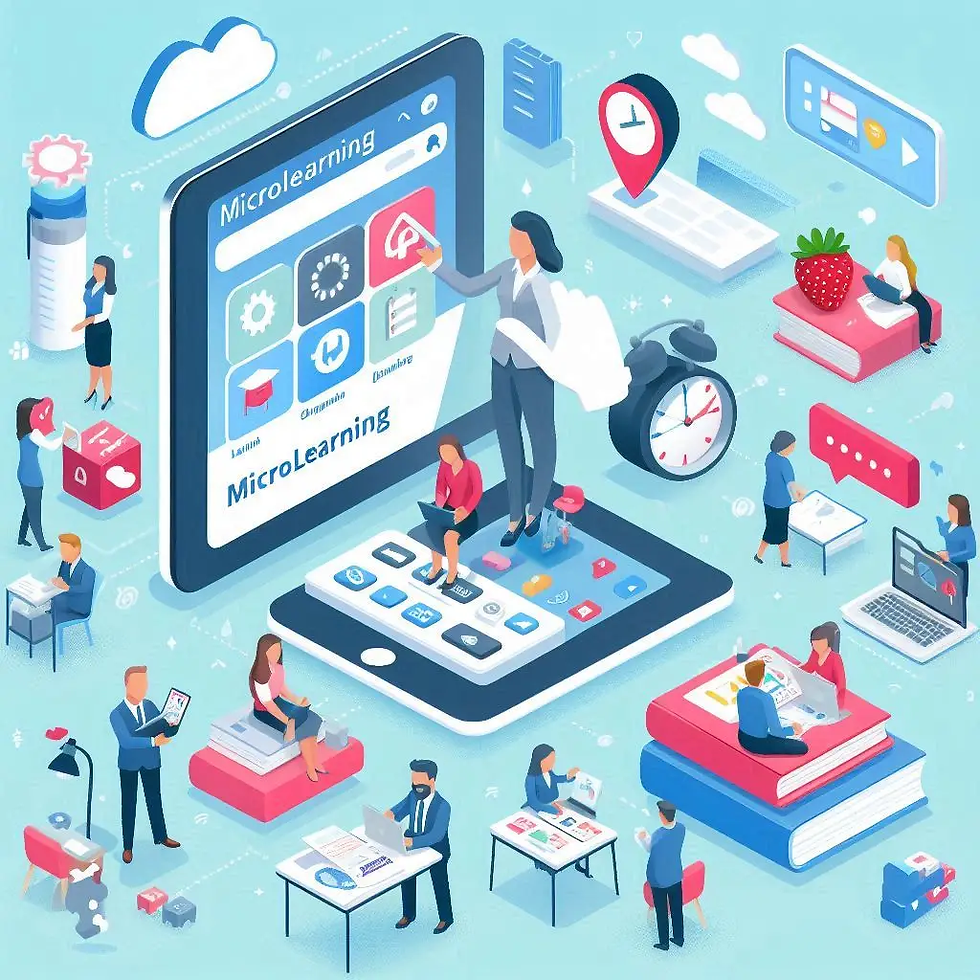
In a world filled with short attention spans and constant digital noise, microlearning has emerged as one of education’s most powerful strategies. It’s simple: break lessons into bite-sized, focused learning moments that fit the way modern students actually learn.


Instead of 60-minute lectures, students can learn through 3- to 5-minute bursts — each centered on one concept or skill. Whether it’s a short animation explaining Newton’s laws or a quick quiz that reinforces key formulas, microlearning keeps learners engaged and improves long-term retention.


The magic deepens when it’s personalized. With AI tools and analytics, microlearning can adapt to each learner’s pace and gaps. Struggling with a concept? The system gives you an extra practice quiz. Mastered it? It moves you ahead.


For tutors and educators, this isn’t just a trend — it’s a transformation. Microlearning allows lessons to travel beyond the classroom: on phones, tablets, or even chatbots. It’s scalable, flexible, and future-ready.


Education doesn’t need to be long to be lasting. Sometimes, the smallest lessons make the biggest impact.


Singapore’s education system has long been admired for its rigor and results. But behind every success story lies a quieter concern — the relentless “education arms race” that leaves students anxious, parents exhausted, and teachers stretched thin.


The shift we now see — in schools and in society — is a growing recognition that academic excellence must coexist with emotional well-being. The Ministry of Education’s recent reforms, such as removing mid-year exams in certain levels and placing more emphasis on holistic development, reflect this mindset change.

Reducing exam pressure doesn’t mean lowering standards. It means redefining what success looks like — valuing curiosity, resilience, and collaboration as much as content mastery. When students are encouraged to learn for understanding rather than grades, their motivation deepens and their learning becomes self-sustaining.


Parents play a key role in this transition. Instead of focusing on “getting ahead,” the conversation can shift to growth, progress, and balance. Schools, in turn, can design learning experiences that reward creativity and problem-solving — the very skills needed for an uncertain future.


Breaking away from the arms race isn’t about slowing down; it’s about moving forward more wisely.


Singapore’s classrooms are evolving quietly but powerfully. Behind every quiz, reflection, or simulation on the Student Learning Space (SLS), data analytics and artificial intelligence (AI) are helping teachers understand how students think, not just what they score.


🔍 How AI and Analytics Are Already Used in SLS


1. Data Assistant (DAT)The Ministry of Education (MOE) has rolled out an AI-powered Data Assistant within SLS. It allows teachers to ask questions like,

“What misconceptions did my students have in this quiz?”

In seconds, the tool scans student answers, groups similar responses, and highlights common mistakes. Teachers can even use “recipes”—ready-made query templates—to generate feedback more efficiently.


2. EJSS Simulations and Data Analytics


Science students often interact with Easy JavaScript Simulations (EJSS) inside SLS. These simulations record each student’s learning journey—every slider moved, every variable tested. Researchers have shown that this data reveals how students explore and where confusion begins, offering teachers a window into learning processes, not just results.


✅ Why This Matters


  • Faster diagnosis: Teachers can identify misconceptions right after an activity.

  • Smarter teaching: Data helps teachers decide what to reteach or reinforce.

  • Less marking load: Automated summaries reduce manual review time.

  • Personalised learning: Students get targeted feedback instead of generic comments.


⚠️ The Challenges Ahead


  • Privacy & ethics: Student data must be stored securely and used responsibly.

  • Teacher readiness: Data is only useful when teachers know how to act on it.

  • Overreliance risk: AI insights should guide, not replace, professional judgment.


As one MOE educator noted, “Analytics don’t replace the teacher—they empower one.”


🌱 What Comes Next


Singapore’s next step is clear: deeper integration of AI to make learning more adaptive and personalized. Imagine an AI tutor that gives instant feedback after homework, or a dashboard showing which topics a student truly understands.

For private tutors and learning centres, this trend is an opportunity to build small-scale versions—AI study buddies, micro dashboards, or even analytics-aware worksheets that reflect what SLS is pioneering nationally.


🧭 Final Thought


AI in education isn’t about replacing teachers. It’s about revealing patterns, saving time, and helping educators focus where they matter most—teaching and mentoring human minds.


bottom of page